
Why Are GMDSS Failures Still So Common?
Why Are GMDSS Failures Still So Common?
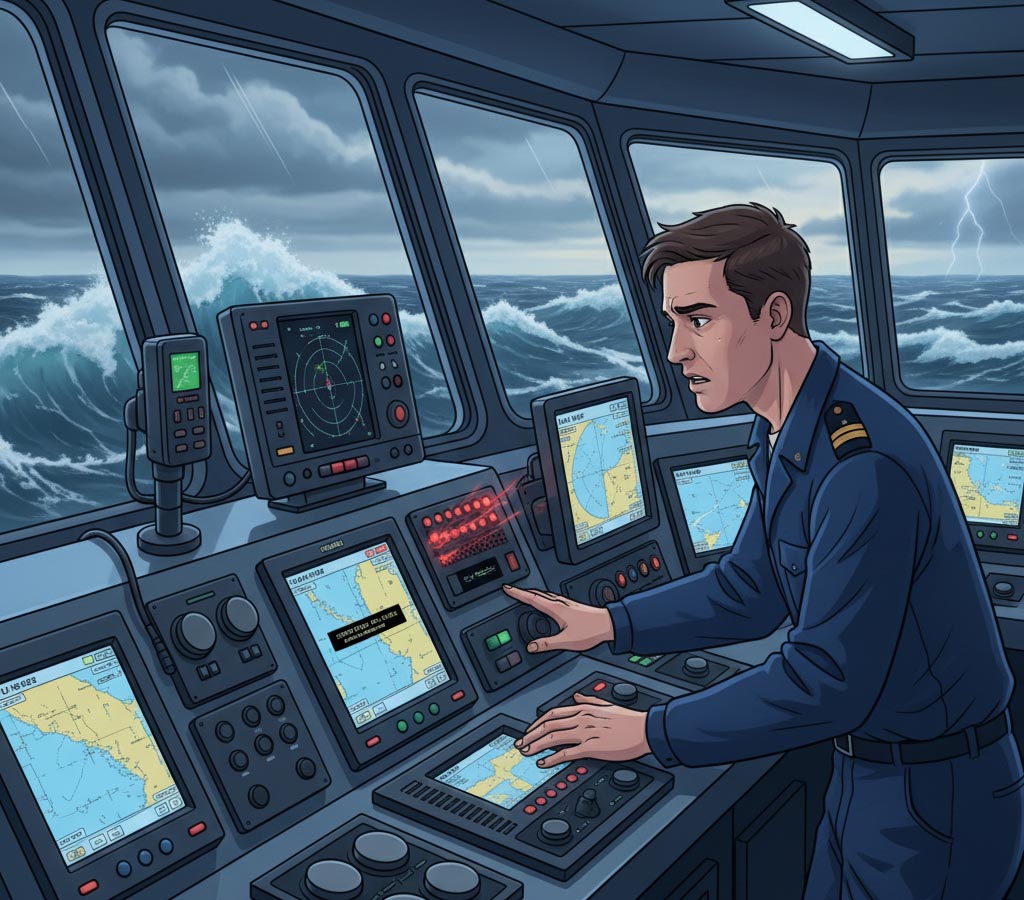
Despite decades of global regulation, satellite upgrades, and so-called "smart" installations — GMDSS (Global Maritime Distress and Safety System) failures continue to happen. Often. And usually at the worst possible time.
Sowhat’s going wrong? Let’s break it down.
1. GMDSS Isn’t Plug-and-Play
One of the biggest misconceptions we still see onboard is this: once the GMDSS console is installed and blinking, it’s "done." That’s far from the truth. GMDSS equipment needs:
- Regular power supply checks (especially battery backups)
- Functional EPIRBs and SARTs (not expired or waterlogged)
- Properly configured DSC alerts
- Real-world testing during maintenance — not just simulation
When even one of these is skipped, the system is compromised. We’ve serviced vessels where the GMDSS looked fine on paper — but the antenna was misaligned, making it useless during a real distress call.
2. Poor Installation or Refit Work
GMDSS failures often begin at install. We've seen:
- Cables bent too tight or left exposed to salt spray
- Incomplete flag state programming
- Radios wired incorrectly to emergency power
That’s why at Global Tech, we double-check compatibility, cabling integrity, and compliance for every flag state requirement — whether it’s India, UAE, Singapore, or Egypt. One loose wire can cost a captain his safety certificate.
3. Missed Radio Surveys or VDR APT
This one’s big. Too many operators delay or rush their annual radio surveys or VDR (Voyage Data Recorder) APTs — treating them like last-minute chores instead of critical diagnostics.
We’ve had calls from vessels detained in port because:
- Their MF/HF failed range testing
- The VHF DSC hadn’t transmitted properly in months
- The GPS rollover hadn’t been patched in time
All of these are GMDSS-linked, and all avoidable.
4. Crew Training Gaps
Technology can’t replace knowledge. And too often, we see crews unsure of:
- How to manually trigger a distress alert
- What each channel actually does
- Which equipment powers what
We’ve even seen distress signals get stuck in test mode — because no one knew how to reset them.
That’s why Global Tech not only services GMDSS systems — we train the crew onboard during handovers.
5. Weather, Wear, and Tear
GMDSS components live in harsh environments: salt, heat, vibration, moisture. Over time, that means corrosion, cracked cables, degraded seals, and fading display screens.
Annual maintenance isn’t optional. It’s survival.
- Regular visual inspections (especially antennas and power units)
- Battery voltage checks and load tests
- Service logs for each GMDSS component
How We Fix It
Global Tech engineers specialize in:
- GMDSS troubleshooting onboard and offshore
- Flag state reconfiguration
- Replacing damaged antennas, fuses, and DSC units
- Conducting full Radio Surveys and VDR APTs for class approval
We stock critical GMDSS spares for major OEMs — including Furuno, JRC, Sailor, and Icom — ready for deployment at ports across India, UAE, Singapore, and Egypt.
Whether you’re docked in Dubai, mid-sea in the Indian Ocean, or anchored in Alexandria — we’ve likely been there, and fixed that.
📩 Contact UsFinal Word
GMDSS is your vessel’s last line of defense when all else fails. If it doesn’t work when you need it — nothing else will matter.
Don’t wait until an audit, breakdown, or distress call to find out your system’s failing.
If you need help with a GMDSS issue — reach out. Global Tech has you covered.